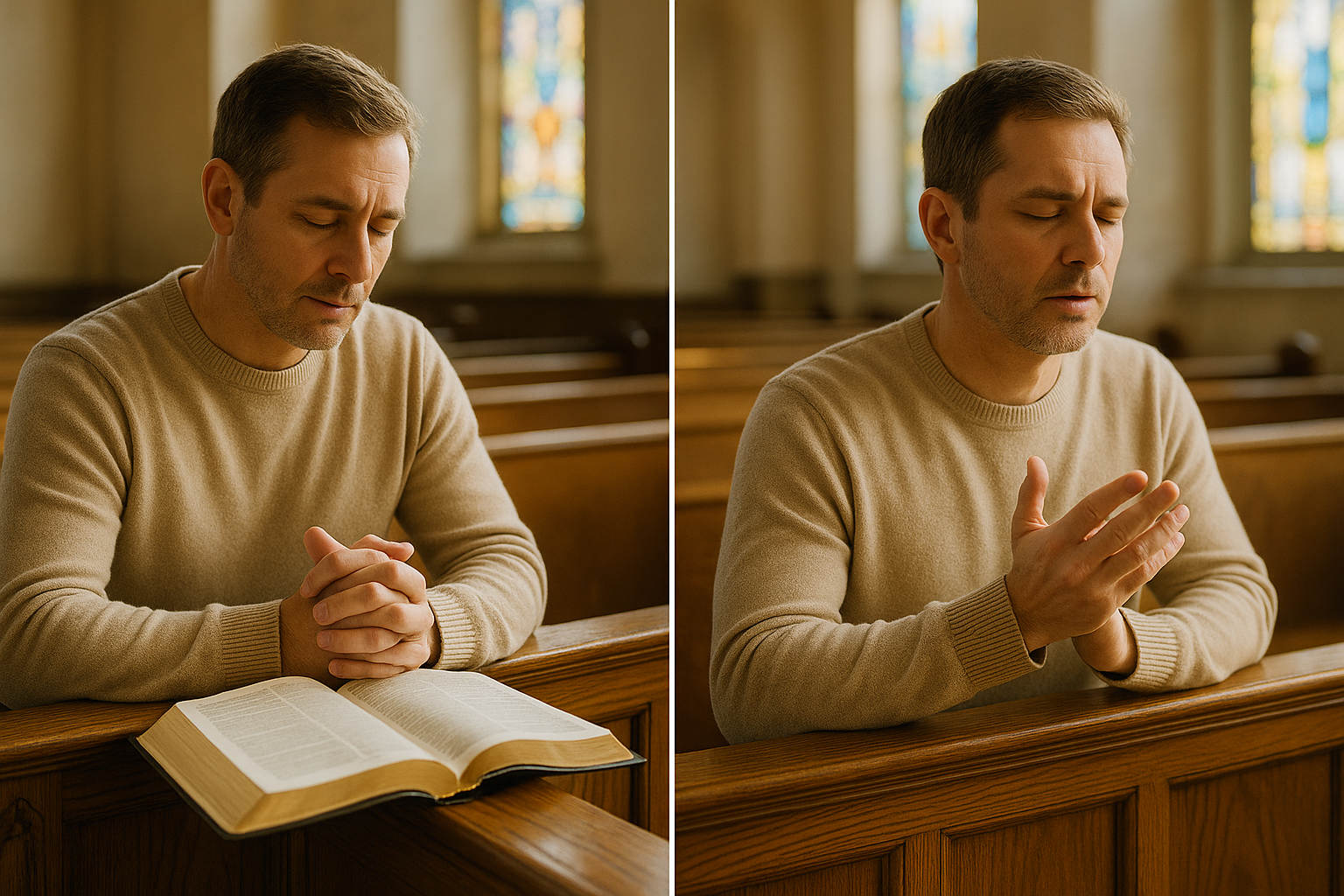
If you’ve ever opened the Bible, read a passage, and thought, “Okay… now what?” you’re in very good company. A lot of Catholics want a deeper prayer life, but when they sit down with Scripture, they suddenly feel like they’ve been handed a medieval map with no legend.
That’s where lectio divina comes in.
Lectio divina steps give Catholics a simple, prayerful way to read Scripture and actually listen for God’s voice. It’s not complicated, it doesn’t require a theology degree, and no, you do not need to whisper in Latin for it to “count.”

What Is Lectio Divina?
The Latin phrase lectio divina means “divine reading.” It is a prayerful way of reading Scripture that dates back to the early Church and flourished in monastic communities. The Church has long encouraged this kind of prayerful reading because it helps the Word of God become something living, personal, and transformative in daily life.
Now, before this starts sounding like a Bible study competition, let’s be clear: lectio divina is not the same thing as academic study. Bible study asks important questions like, “What does this passage mean in its historical and literary context?” Lectio divina asks that too, but it goes further: “Lord, what are you saying to me through this passage right now?”
That’s a very Catholic instinct. We don’t treat Scripture like a museum artifact behind glass. We treat it like the living voice of God speaking to his people.
As the psalmist says, “Your word is a lamp for my feet, a light for my path” (Ps 119:105, NABRE). That’s lectio divina in a nutshell: letting God’s Word guide the next step, not just fill the notebook.
Lectio Divina Steps: The Four Movements of Prayer
Traditionally, lectio divina follows four movements: lectio, meditatio, oratio, contemplatio. Think of them as four gentle steps into God’s presence. Not four hoops to jump through. More like four ways of slowing down enough to hear him.
1. Lectio: Read
Begin by reading a short passage of Scripture slowly and attentively.
Ask:
– What words or phrases stand out?
– What is happening in the passage?
– What catches my attention?
Don’t rush. The goal is not to “get through” a chapter. The goal is to listen.
A short Gospel passage works especially well, and the daily Mass readings are a great place to start. There’s a reason the Church feeds us Scripture at Mass: God’s Word is meant to be heard, received, and lived.
This step echoes St. Paul’s exhortation: “Let the word of Christ dwell in you richly” (Col 3:16, NABRE).
2. Meditatio: Meditate
Read the passage again and reflect on it.
Ask:
– What is God saying through this text?
– How does it connect to my life?
– What part of this passage speaks to my situation today?
This is where many people get stuck because the word “meditation” can sound intimidating. But Catholic meditation is not about emptying your mind into a spiritual parking lot. It’s about filling your heart with God’s Word and turning it over with attention and love.
The Catechism describes meditation as a prayerful engagement of thought, imagination, emotion, and desire so that the Word of God becomes our own (CCC 2705–2708). In other words, you are not just reading the text; you are letting the text read you.
A beautiful biblical image here is Mary, who “kept all these things, reflecting on them in her heart” (Lk 2:19, NABRE). That’s lectio divina with a Marian accent: quiet, receptive, and deeply attentive.
3. Oratio: Pray
Now respond to God.
Ask:
– What do I want to say to the Lord?
– What praise, thanksgiving, repentance, or request rises from this passage?
This is the moment when Scripture becomes conversation. You’re no longer just reading about God; you’re speaking to him.
If the passage reveals God’s mercy, you might pray:
“Lord, I trust in your mercy. Help me believe that your forgiveness is real.”
If the passage challenges you, you might pray:
“Jesus, give me the grace to obey you with a willing heart.”
If the passage comforts you, you might simply say:
“Thank you, Lord. I needed that.”
That counts too. God is not impressed by polished speeches. He wants your heart.
4. Contemplatio: Contemplate
Finally, rest in God’s presence.
Ask:
– Can I simply be with the Lord now?
– What does it mean to trust him without words?
Contemplation is not about doing more. It’s about receiving more deeply. After listening, reflecting, and praying, you rest quietly before God. This is where the soul learns that prayer is not only speaking, but also being loved.
St. Paul reminds us that “the word of God is living and effective” (Heb 4:12, NABRE). Lectio divina allows that living Word to sink in, not just skim the surface and bounce off like a pebble on water.

Why Catholics Should Practice Lectio Divina
The Catholic Church has long encouraged prayerful meditation on Scripture. The Catechism teaches that meditating on God’s Word helps us confront the realities of our life in the light of faith (CCC 2708). Vatican II’s Dei Verbum also urges all the faithful to read Scripture often and let prayer accompany that reading.
That’s not Church-speak for “nice idea if you have extra time.” It’s a real invitation.
In practical terms, lectio divina helps us:
– grow in intimacy with Christ
– hear God more clearly
– form our conscience
– develop spiritual discipline
– apply Scripture to daily life
It also keeps us grounded in an important truth: the Bible is not a dead text. It is the living Word of God, and God still speaks through it.
How to Pray Lectio Divina This Week
You do not need the perfect candle, the perfect chair, or the perfect soundtrack of Gregorian chant in the background. A quiet space, a little time, and a passage of Scripture are enough.
Try this:
1. Choose a short Gospel passage, maybe from Sunday Mass.
2. Set aside 10–20 minutes.
3. Pray for the Holy Spirit.
4. Walk through the four steps: read, reflect, respond, rest.
5. End with one concrete action for the day.
That last part matters. Lectio divina should lead to life change. If the Word of God really reaches us, it should make us more patient, more humble, more forgiving, and more willing to love.
In other words, if you read the passage and then immediately snap at everyone in the parking lot, it may be time to try again.
A Tradition with Deep Roots
Lectio divina is ancient. It grew in the early Church and was especially cherished in monastic life, where monks wove Scripture into the rhythm of daily prayer. Later, St. Benedict helped shape a culture in which the Bible was not merely studied but prayed.
That’s the genius of lectio divina: it makes Scripture personal without making it private, prayerful without becoming vague, and deeply traditional without feeling inaccessible.
It is not a trendy spiritual hack. It is a time-tested way of placing ourselves before God’s Word and letting him do the heavy lifting.
Frequently Asked Questions About Lectio Divina
Is lectio divina only for monks or religious?
No. While it has strong roots in monastic life, lectio divina is for all Catholics. Lay people, parents, students, busy professionals, and retirees can all practice it. If you can read a short passage and spend a few minutes in silence, you can do lectio divina.
Do I need to use a specific Bible passage?
Not necessarily. Many people begin with the daily Mass readings or a Gospel passage. That said, any passage can be prayed with, especially if you keep it short enough to reflect on slowly.
What if I don’t “feel” anything during prayer?
That’s normal. Lectio divina is not about chasing a spiritual sensation. Sometimes prayer feels warm and comforting; sometimes it feels dry and ordinary. God is still at work either way. Faithfulness matters more than fireworks.
How long should lectio divina take?
It can be as short as 10 minutes or as long as an hour. Start small and be consistent. A brief daily practice is often better than a grand weekly plan that collapses under the weight of real life.
Closing Thoughts
If you’ve been looking for a way to deepen your prayer life, lectio divina is an excellent place to start. It is simple, faithful, and transformative. Most importantly, it teaches us to listen—to really listen—to the voice of God in Scripture.
So the next time you open the Bible, don’t race through the passage like you’re trying to beat a traffic light. Pause. Read slowly. Reflect honestly. Pray sincerely. Rest quietly. Then carry one word, one phrase, or one invitation into your day.
The Word of God is alive. Let it speak to you.
And if you want to grow further, consider pairing lectio divina with the Mass, regular Confession, and time before the Blessed Sacrament. That’s where Scripture begins to take root and bear fruit in a Catholic life.