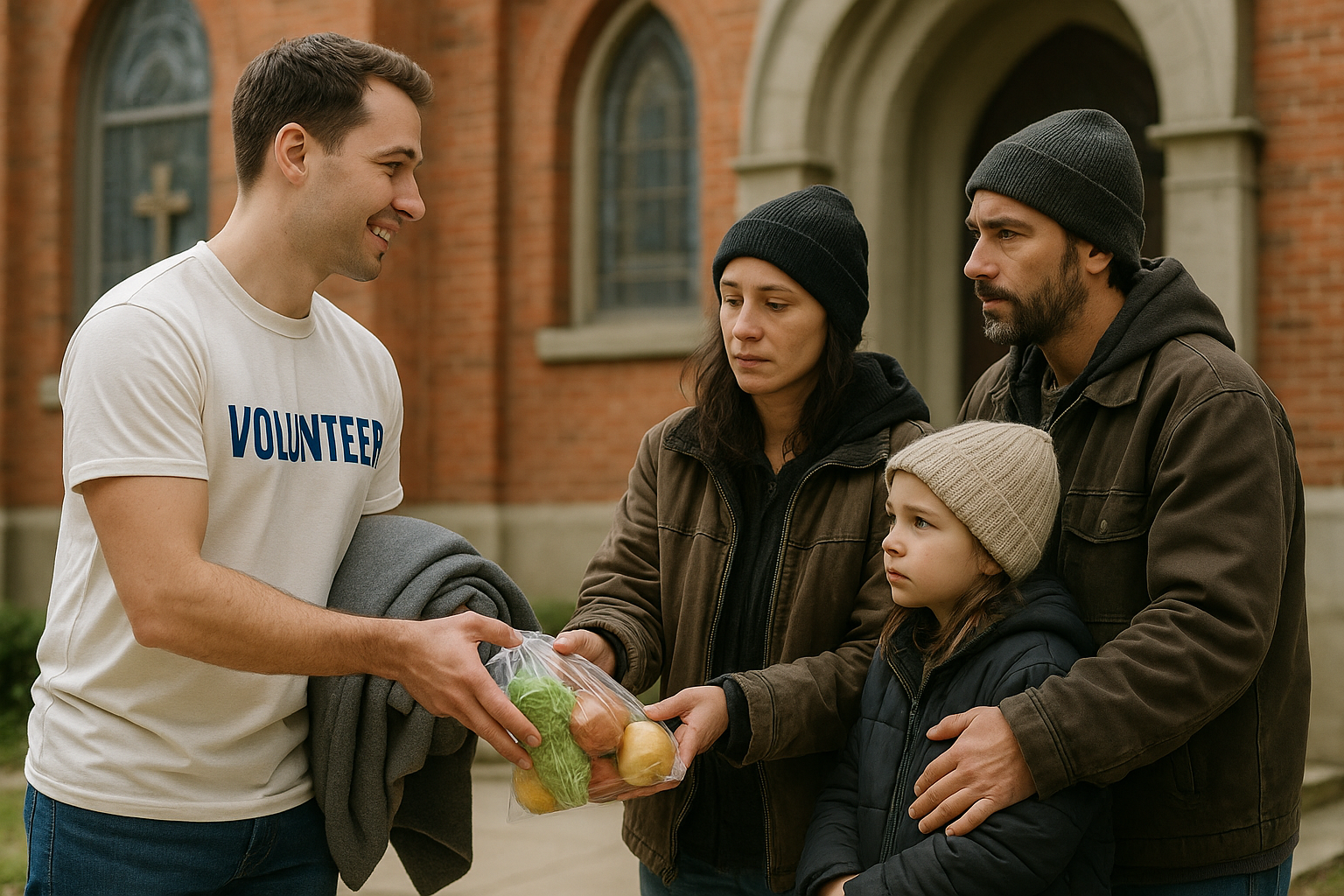
Let’s be honest: it’s easy to say we care about the poor while keeping our distance. A donation here, a sympathetic thought there, maybe a quick mental note after Sunday Mass and coffee-and-donuts. But Catholic social teaching is not interested in polite nods. It asks something much more demanding—and much more Christian.
The Church’s preferential option for the poor and vulnerable is not a trendy slogan or a side note in the faith. It is a way of seeing the world through the heart of Christ. God has a special love for those who are poor, suffering, or pushed to the margins, and Catholics are called to reflect that love in action.

What the Church Means by “Preferential Option”
The phrase can sound a little academic, but the idea is very practical. In the Compendium of the Social Doctrine of the Church, the Church teaches that the preferential option for the poor is “a special form of primacy in the exercise of Christian charity” and must be reaffirmed in all its force.
The USCCB explains it plainly: those who are weak, vulnerable, and most in need deserve preferential concern. That does not mean the Church loves some people and ignores others. It means that when we choose where to focus our attention, resources, and compassion, we begin with those most likely to be overlooked.
A helpful way to say it is this: the preferential option is not about excluding anyone; it is about refusing to ignore those whom society most easily forgets.
This is really about love with its sleeves rolled up. Not sentimental love. Not “thoughts and prayers” with no follow-through. Real love.
Scripture’s Clear Concern for the Poor
This teaching is deeply biblical. From Genesis to Revelation, God shows a special care for the poor, the widow, the orphan, and the stranger.
A few key passages stand out:
– Matthew 25:31–46 — Jesus identifies himself with the hungry, thirsty, stranger, naked, sick, and imprisoned. “Whatever you did for one of these least brothers of mine, you did for me” (Mt 25:40, NABRE).
– Luke 4:18–19 — Jesus announces his mission: “He has sent me to proclaim liberty to captives and recovery of sight to the blind, to let the oppressed go free.”
– Luke 6:20 — “Blessed are you who are poor, for the kingdom of God is yours.”
– James 2:1–7 — The Apostle James warns against favoritism, especially giving honor to the rich while shaming the poor.
– Isaiah 58:6–7 — True worship includes sharing bread with the hungry and sheltering the oppressed.
– Proverbs 19:17 — “Whoever is kind to the poor lends to the LORD.”
Here’s where things get interesting: Scripture does not treat care for the poor as optional extra credit for especially nice believers. It treats it as a test of whether our worship is real. Cue the awkward silence at Bible study.
If faith does not make us more attentive to the poor, it has not yet reached our wallets, calendars, or habits—and those are usually the places where discipleship gets honest.
A Tradition as Old as the Church
The Church’s concern for the poor is not a modern invention. It is part of her oldest tradition.
In the Acts of the Apostles, the first Christians shared their possessions so that “there was no needy person among them” (Acts 4:34). The early Church quickly developed ministries to care for widows, orphans, and the poor.
The Church Fathers continued this tradition with force. St. John Chrysostom and St. Basil the Great both taught that wealth is not meant to be hoarded while others suffer. Their message was blunt: what we keep unnecessarily while others lack necessities is not really ours to begin with.
That same theme appears in modern Catholic social teaching. Pope St. John Paul II, Pope Benedict XVI, and Pope Francis all reaffirmed the Church’s duty to stand with the poor. Pope Francis, especially, has repeatedly urged the Church to go to the “peripheries” and to place the poor at the center of pastoral concern.
This is not the Church changing with the times. It is the Church repeating something she has always known: the Gospel has a social shape, and Christ is found in people the world is tempted to overlook.
Why This Is More Than Charity
Catholic teaching does not reduce love for the poor to occasional handouts, though almsgiving is good and necessary. The Church also speaks about justice.
Why? Because many people are poor not just because of bad luck or personal choices, but because of systems that deny them fair access to work, education, housing, healthcare, and safety. So the preferential option for the poor has both a personal and a social dimension.
Personally, it means:
– Practicing generosity with time, money, and attention
– Simplifying our lifestyles
– Serving in works of mercy
– Examining whether our habits help or harm others
Socially, it means:
– Supporting policies that protect human dignity
– Defending the rights of workers
– Advocating for the unborn, the elderly, the disabled, migrants, and the homeless
– Building institutions that serve the common good
The Catechism of the Catholic Church teaches in CCC 2448 that the Church’s love for the poor is part of her constant tradition, and in CCC 2444–2447 it emphasizes the duty to love the poor, practice mercy, and avoid ignoring those in need. The Church also teaches the universal destination of goods, meaning that the earth’s goods are meant for everyone, not only the wealthy or powerful.
That principle is quietly radical. It says creation is gift, not trophy. We are stewards, not owners in the “mine, all mine” sense. And stewardship always comes with responsibility.

What It Does Not Mean
Because this topic can get politicized, it is worth being clear about what the preferential option for the poor does not mean.
It does not mean:
– God loves the poor and dislikes everyone else
– Catholics can ignore other moral issues
– The Church endorses one political party or ideology
– Concern for the poor is only about economics
Instead, it means Catholics should evaluate every issue by asking: Does this protect human dignity, especially for those with the least power?
That includes questions about poverty, yes, but also about abortion, euthanasia, racism, immigration, labor conditions, and care for the environment. Catholic social teaching is integrated, not fragmented.
In other words, we do not get to love the poor while casually discarding other vulnerable people. The Church’s moral vision is not a buffet line where we pick the causes we find convenient.

Living It Out Today
For most Catholics, the preferential option for the poor begins close to home. You do not need to run a nonprofit or write legislation to live this teaching. You can start with small, steady acts of Christian love.
Try asking:
– Who is poor or vulnerable in my parish or neighborhood?
– Am I giving to the poor in a way that is consistent and sacrificial?
– Do I notice the people others overlook?
– Does my lifestyle leave room for generosity?
– How does my family, business, or parish serve those in need?
A few practical ways to begin:
1. Donate regularly to a trusted charity or parish outreach.
2. Volunteer at a food pantry, shelter, or pregnancy center.
3. Support ministries for prisoners, immigrants, and the elderly.
4. Buy less, give more, and live with intentional simplicity.
5. Pray for the grace to see Christ in the poor.
The holiness here is not flashy. It looks a lot like consistency, mercy, and a willingness to be interrupted by someone else’s need. Not exactly glamorous—but very Gospel-shaped.
A Final Word
The preferential concern for the poor and vulnerable is not a side project for especially “socially minded” Catholics. It is part of the Gospel itself. When Jesus announced his mission, he spoke of good news to the poor. When he described final judgment, he identified himself with “the least.” When the Church teaches charity, she puts the poor near the center, not at the edge.
If we want to be faithful disciples, we have to let Christ reshape our priorities. The poor should not be invisible to us, because they are never invisible to him.
May we learn to see the world as Jesus sees it—and to love the way he loves.