Let’s be honest: when most people hear “caring for creation,” they picture recycling bins, reusable water bottles, and maybe that one parishioner who always reminds everyone to turn off the lights. But for Catholics, caring for creation is not just a lifestyle preference or an Earth Day hobby. It’s a spiritual responsibility.
Creation is not random stuff lying around for human beings to use up. It is God’s gift. And if it’s God’s gift, then the right response is gratitude, reverence, and stewardship—not waste, indifference, or the theological equivalent of treating the world like a disposable coffee cup.
In other words, caring for God’s creation is part of living the Gospel.

Creation Belongs to the Lord
The Bible opens with a truth that changes everything: God is the Creator, and creation belongs to Him.
“In the beginning, when God created the heavens and the earth…” (Genesis 1:1, NABRE). And the psalmist says it even more directly: “The earth is the LORD’s and all it holds, the world and those who dwell in it” (Psalm 24:1, NABRE).
That means we are not owners in the absolute sense. We are stewards.
Genesis 2:15 says the Lord placed the human person in the garden “to cultivate and care for it” (NABRE). That’s a beautiful summary of our vocation: not exploitation, but stewardship. Not domination without limits, but responsible care.
The Catechism of the Catholic Church says creation reflects God’s goodness, wisdom, and beauty (see CCC 339–344). It also teaches that human dominion over creation is not absolute; it must be exercised for the common good and with concern for future generations (CCC 2415–2418).
That’s not just theory. That’s a way of seeing the world.

Why This Matters to Catholics
Caring for creation is not an optional add-on for especially outdoorsy Catholics. It belongs to the moral life.
The USCCB has said plainly that care for the earth “is not just an Earth Day slogan, it is a requirement of our faith.” That may sound strong, but it makes sense once you remember that loving God and loving neighbor are never separated in Catholic life.
If God made the world, then the way we treat it says something about how we love Him.
Jesus Himself points us to creation as a sign of the Father’s providence. In Matthew 6:26–30, He tells us to look at the birds of the air and the lilies of the field. If God cares for them, how much more will He care for us? That passage teaches trust, yes—but also reverence for the world God sustains.
St. Paul adds another striking image: “all creation is groaning in labor pains even until now” (Romans 8:22, NABRE). Creation is wounded and longing for redemption. Catholics should hear that groaning, not shrug and keep walking.
Laudato Si’ and Integral Ecology
Pope Francis’ encyclical Laudato Si’ gave the Church a powerful way to talk about this responsibility. One of its key ideas is integral ecology: the truth that environmental, social, economic, and moral issues are deeply connected.
That means we cannot separate pollution from poverty, or climate change from migration, or resource exploitation from human dignity. As Pope Francis famously reminds us, “everything is connected.”
This is why creation care is also a justice issue. Environmental harm often hits the poor first and hardest. Communities with fewer resources are more likely to live near pollution, face water insecurity, and suffer from extreme weather with fewer protections.
A Catholic response has to include compassion for those who bear the heaviest burdens. This is what the Church means by listening to both the cry of the earth and the cry of the poor.
What Catholic Teaching Actually Means by Stewardship
Catholic stewardship is not nature worship, and it is not a vague “be green” slogan. It is a moral responsibility grounded in the truth that creation is ordered to God.
Here are a few principles that flow from that teaching:
1. Respect for life
We cannot say we love people while ignoring conditions that damage health, threaten livelihoods, or destroy communities.
2. The common good
The earth is a shared home. Our decisions about energy, land, water, and consumption affect everyone—not just ourselves.
3. The universal destination of goods
The goods of creation are intended for all. Private property is legitimate, but it comes with a social responsibility.
4. Solidarity
We are connected to one another across borders and generations. What we waste today may burden others tomorrow.
5. Simplicity and self-restraint
Catholic life does not require everyone to live like a monk, but it does challenge consumerism. More stuff is not the same as more joy. A garage full of unused gadgets is not a beatitude.
The Saints Knew This Too
St. Francis of Assisi is the Church’s great witness to creation care. He praised God through Brother Sun, Sister Moon, wind, water, and earth—not because he worshiped nature, but because he saw creation as a reflection of the Creator.
His joy was rooted in humility, poverty of spirit, and gratitude.
Other saints also help us here:
– St. Benedict taught a balanced life of prayer and work, with careful stewardship of place and community.
– St. Hildegard of Bingen celebrated the life-giving vitality of creation.
– St. Basil the Great and St. John Chrysostom warned against greed, waste, and indifference to the poor.
The saints remind us that creation care is not some modern trend cooked up in a conference room. It is a deeply Christian instinct.

What Catholics Can Do in Daily Life
The good news is that caring for creation starts with ordinary choices. No one has to become a wilderness hermit overnight.
At home
– Use water and electricity responsibly
– Reduce waste
– Repair, reuse, and recycle when possible
– Buy less, but buy better
– Choose durable goods over disposable ones
In the parish
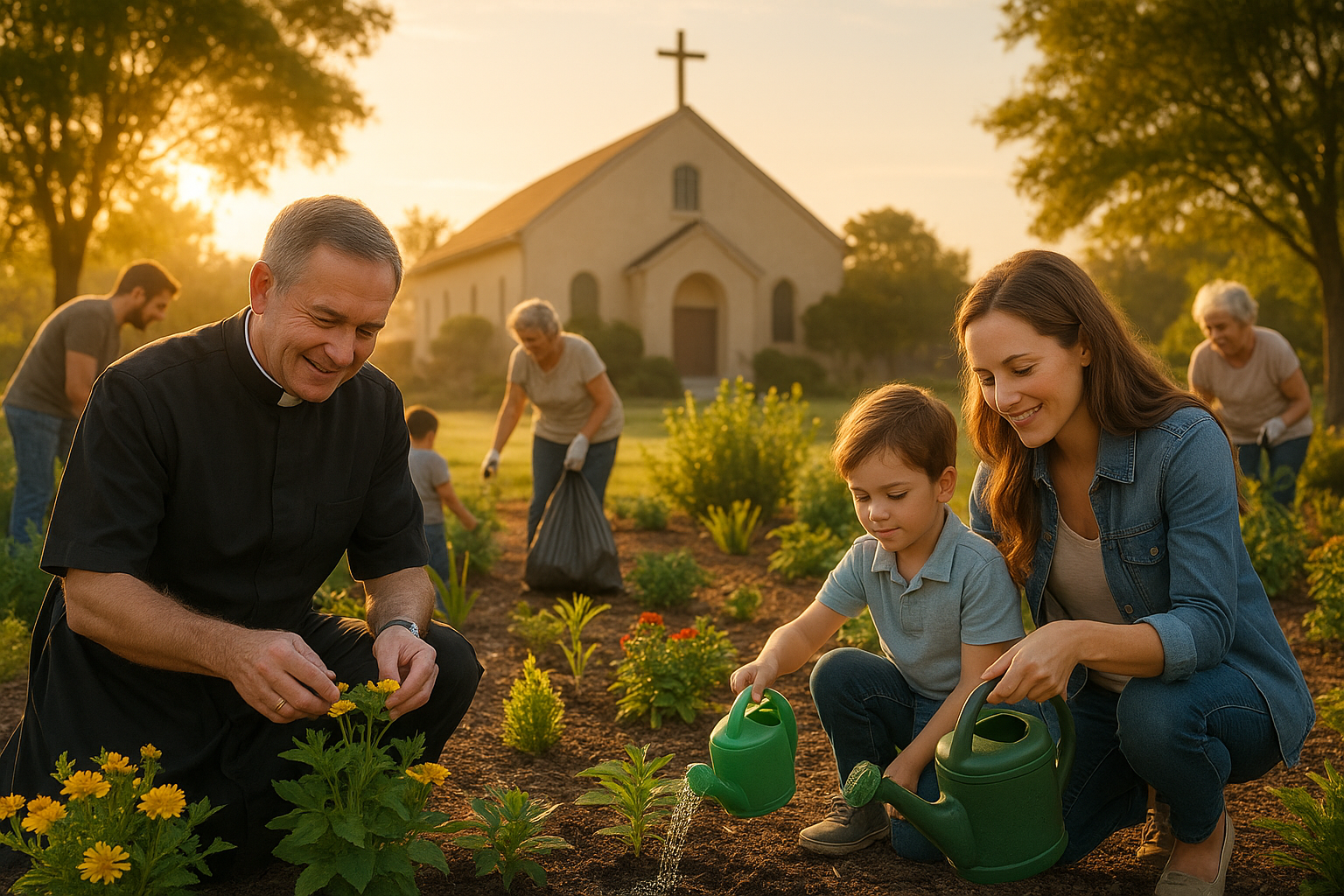
– Support parish gardens, native plantings, and energy-saving efforts
– Reduce paper and disposable materials at events
– Include creation care in religious education and homilies
– Pray for communities affected by storms, drought, and pollution
In public life
Catholics should support policies that protect human dignity, the poor, and the natural world. That does not mean joining a partisan club with leaves on the logo. It means making moral judgments with a formed conscience.
The Church encourages dialogue, prudence, and serious attention to science, while always keeping the human person at the center.
Care for God’s creation is really about love: love for God, love for neighbor, and love for the gift we have received.
As Laudato Si’ and Laudate Deum remind us, ecological conversion is not just about changing habits. It is about changing hearts.
If we belong to Christ, then we should care about what He created. We should live with gratitude, use resources wisely, protect the vulnerable, and reject the throwaway culture that treats both people and the planet as disposable.
The earth is not ours to ruin. It is God’s gift, entrusted to us for a time.
So, let’s pray, act, and live as faithful stewards. And maybe let’s start with something simple: thank God for the world He made, then do one concrete thing today to care for it.
Leave a Reply