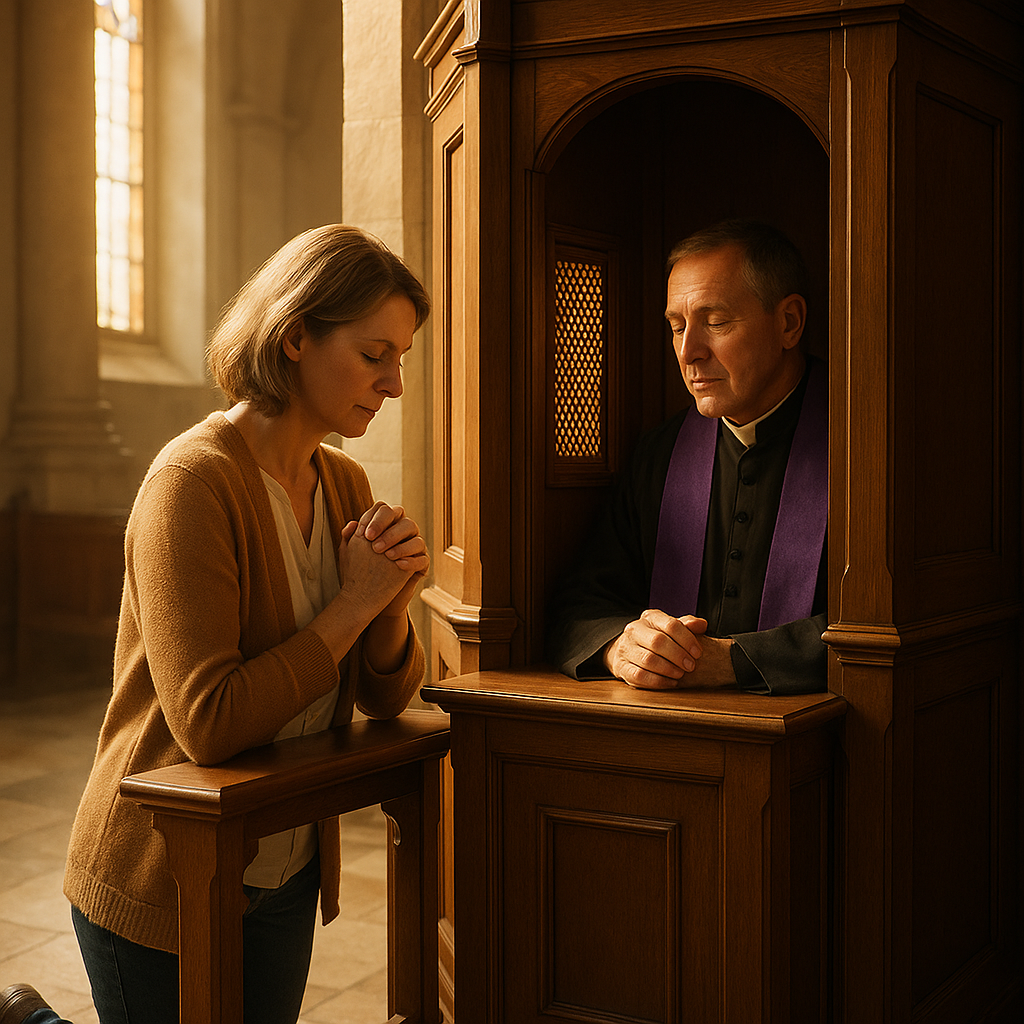
If the words Catholic Confession make you a little nervous, you are definitely not alone. For a lot of Catholics, the Sacrament of Reconciliation can feel like the spiritual equivalent of the dentist: necessary, healing, and maybe not your favorite thing to schedule. But here’s the good news—Confession is not where God rolls His eyes at you. It’s where He meets you with mercy, truth, and a fresh start. And honestly, most of us could use a fresh start now and then.
What Is Catholic Confession?
Catholic Confession, also called the Sacrament of Penance or Reconciliation, is one of the seven sacraments instituted by Christ to forgive sins and restore our friendship with God. The Catechism of the Catholic Church teaches that sin is “an offense against God, a rupture of communion with him” (CCC 1440). Confession is how that rupture is healed.
This sacrament is not a Catholic add-on or a medieval spiritual custom that someone made up between coffee breaks. It comes from Jesus Himself. After the Resurrection, Christ breathed on the apostles and said, “Whose sins you forgive are forgiven them, and whose sins you retain are retained” (John 20:22–23, NABRE). That is a stunning moment. Jesus entrusted His Church with real authority to forgive sins in His name.

Why Catholics Go to Confession
The short answer: because we sin, and God is merciful.
The longer answer is even better: Confession is not just about “getting in trouble” or avoiding punishment. It is about healing. Sin wounds our relationship with God, weakens our soul, and often damages other people too. Confession helps repair what sin tears apart.
The Church teaches that the sacrament includes four essential parts:
– Contrition: being truly sorry for sin
– Confession: honestly admitting our sins
– Penance: doing what the priest assigns as a sign of repair
– Absolution: the priest’s prayer of forgiveness in Christ’s name
The priest is not acting like a private counselor with a collar or a spiritual referee keeping score. He acts in persona Christi—in the person of Christ. So when he gives absolution, it is Christ who forgives.
Biblical Roots of Confession
Catholic Confession is deeply biblical. The Church did not invent it out of thin air like some theological kitchen experiment. A few passages are especially important:
– John 20:22–23 — Jesus gives the apostles authority to forgive sins.
– James 5:16 — “Confess your sins to one another and pray for one another, that you may be healed.”
– 2 Corinthians 5:18–20 — God has given the Church the ministry of reconciliation.
That word reconciliation matters. This sacrament is not just a legal reset button. It is a return to communion—with God, with the Church, and with the life of grace.
How to Go to Confession
If you’ve never been, or if it’s been a while, here’s the simple version. No theology degree required.
1. Prepare your heart
Pray to the Holy Spirit for help. Then make an honest examination of conscience. Ask where you have sinned in thought, word, deed, and omission.
2. Enter the confessional
A common opening is:
“Bless me, Father, for I have sinned. It has been [time] since my last confession.”
If that feels awkward, welcome to being human. It’s a holy kind of awkward, but still awkward.
3. Confess your sins
Speak clearly and simply. If you are confessing mortal sins, name them by kind and number as best you can. You do not need a dramatic backstory or a courtroom-style speech. Just tell the truth.
4. Receive counsel and penance
The priest may offer encouragement, a short bit of advice, or ask a question if needed. Then he gives a penance, usually a prayer or a small act of reparation.
5. Pray the Act of Contrition
This is your moment to express sorrow and your desire to turn back to God. If you do not know the exact words, the priest will help you.
6. Receive absolution
The priest prays the words of forgiveness, and at that moment your sins are forgiven. You respond, “Amen.”
That’s not symbolic forgiveness. That’s real mercy.

Mortal Sin, Venial Sin, and Why It Matters
Not every sin is the same. The Church teaches that mortal sin is a grave offense that destroys charity in the soul when three conditions are present:
– grave matter
– full knowledge
– deliberate consent
Venial sins are real sins too, but they do not break our relationship with God in the same way. Still, regular confession of venial sins is strongly encouraged because it helps us grow in holiness and strengthen our conscience.
If you are unsure whether something is mortal or venial, confess it and ask the priest. Priests really have heard it all—seriously, all of it. There is no sin so strange that it makes a confessor gasp and faint dramatically like a Victorian novel.
The Beautiful Benefits of Confession
Confession is not meant to crush you. It is meant to free you.
Here are some of its fruits:
– peace of conscience
– forgiveness of sins
– restored friendship with God
– healing of spiritual wounds
– strength against temptation
– growth in humility
– a clearer conscience over time
The saints understood this well. St. John Vianney, the beloved Curé of Ars and patron saint of parish priests, spent countless hours in the confessional because he knew that God’s mercy changes lives. St. John Paul II also urged Catholics to rediscover frequent confession as a normal part of Christian life.
At first glance, Confession can feel like a confrontation. But beneath all the Church vocabulary is something surprisingly practical: God wants to heal you.
How Often Should Catholics Go?
The Church requires Catholics conscious of mortal sin to go to Confession before receiving Holy Communion (CCC 1457). Even when mortal sin is not present, frequent confession—monthly is a common and healthy habit—is a beautiful way to keep the soul in good condition.
Think of it like a spiritual tune-up. You do not wait for your car to die in the driveway before checking the engine. The same is true for the soul. A little maintenance goes a long way.

Confession and Everyday Life
This is where Confession gets very real. It is not just about “religious people doing religious things.” It affects ordinary life:
– It helps us become more honest.
– It softens pride.
– It strengthens patience in our families.
– It helps us break habits that keep dragging us down.
– It reminds us that we are not trapped by our worst moments.
In other words, Confession does not just help us avoid sin. It helps us become freer, calmer, and more capable of loving others well.
Final Thoughts
Catholic Confession is not a punishment room. It is a place of mercy, truth, and new beginnings. Christ knew we would need healing, so He gave us a sacrament that meets us right where we are. If you have been away from Confession for a long time, do not be afraid. Start with honesty and trust. The Lord is already waiting for you.
As Psalm 103 says, “Merciful and gracious is the LORD, slow to anger and abounding in kindness” (NABRE). That is the heart of Confession.
So take the next step: pray, examine your conscience, and come home to the mercy of God.
FAQ About Catholic Confession
Do I have to confess all my sins?
You must confess all mortal sins you remember after a serious examination of conscience. Venial sins may also be confessed and are often very helpful to bring to the sacrament.
What if I forget a mortal sin?
If you honestly forgot it, your confession is still valid. If you remember it later, mention it in your next confession.
Can a priest ever repeat what I say?
No. The seal of confession is absolute. The Church protects this sacred confidentiality with the utmost seriousness.
What if I am embarrassed?
That is extremely common. Confession is a place where embarrassment tends to lose its power pretty quickly. Mercy has that effect.