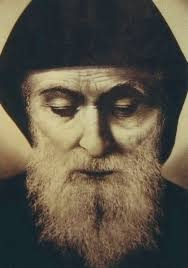
Feast Day: July 24
St. Charbel Makhlouf is one of those saints who makes modern life feel a little loud by comparison. He lived in silence, prayer, poverty, and hiddenness—and yet his witness still echoes across the world. Catholics, Maronites, and even many non-Catholics know him as the “Miracle Monk of Lebanon,” a saint whose life reminds us that holiness does not need a spotlight to change the world.
If you’ve ever wondered why St. Charbel inspires such devotion, the answer is simple: he looked like someone who belonged entirely to God.

Who Was St. Charbel?
St. Charbel was born Youssef Antoun Makhlouf on May 8, 1828, in Bekaa Kafra, a mountain village in Lebanon. Raised in a poor Maronite Catholic family, he grew up with a deep faith shaped by hardship and simplicity. After being drawn to religious life, he entered the Lebanese Maronite Order in 1851 and took the name Charbel, after an early Christian martyr.
He was ordained a priest in 1859 and spent years living a disciplined monastic life at the Monastery of St. Maron in Annaya. In 1875, with permission from his superiors, he withdrew to a hermitage near the monastery, where he lived for the last 23 years of his life as a hermit.
He died on Christmas Eve, December 24, 1898, while celebrating the Divine Liturgy. Even in death, his story only grew stronger.
Why St. Charbel Stands Out
St. Charbel’s holiness was not flashy. He did not found an order, preach public missions, or travel widely. His “apostolate” was hidden prayer.
That matters.
In a culture that measures value by visibility, Charbel reminds us that the most important work often happens in secret. Jesus Himself taught this in Matthew 6:6: “But when you pray, go to your inner room, close the door, and pray to your Father in secret” (NABRE).
Charbel took that seriously. His life was marked by:
– deep prayer
– Eucharistic devotion
– fasting and penance
– silence
– obedience
– love for God in hiddenness
This is why so many Catholics find him so compelling. He shows that sanctity is not about being seen. It is about belonging to Christ.

Miracles and Incorruptibility
After St. Charbel’s burial, unusual signs reportedly began at his tomb, including light seen near the grave. When his body was exhumed, it was found incorrupt and reportedly exuding a fluid that continued for years. Pilgrims soon began arriving at Annaya, and many testified to healings and favors received through his intercession.
The Church is always careful with miracles, and rightly so. Canonization is not based on hype; it involves serious investigation. St. Charbel was beatified by Pope Paul VI in 1965 and canonized in 1977. His holiness was recognized officially by the Church, and devotion to him has only grown since then.
Many faithful also associate St. Charbel with ongoing healings, conversions, and spiritual comfort. His shrine in Annaya remains a major pilgrimage site. For countless people, his intercession is linked not just to physical healing, but to peace of heart and a renewed desire for God.
Beyond the strict Vatican canonization process, the Monastery of Saint Maron in Annaya, Lebanon (where St. Charbel lived and is buried) maintains a meticulous archive of reported miracles.
- Over 30,000 to 33,000 recorded miracles have been registered in their official books since his death in 1898.
- Roughly 10% of these registered cases involve non-Christians (including Muslims, Druze, Buddhists, and atheists).
- The monastery’s registry requires medical records and doctor testimonies before officially filing a claim, making it one of the largest archives of documented supernatural healings in modern history.
A rather astounding miracle happened to Nohad El Shami (1993): A Lebanese mother of 12 was left hemiplegic (paralyzed on one side) after a major stroke. She dreamed that St. Charbel and Saint Maron performed spiritual “surgery” on her neck. She woke up completely healed, with two visible, physical surgical scars on her neck that baffled her doctors.
What the Church Teaches About Saints Like Charbel
According to the Catechism of the Catholic Church, “it is highly fitting that we love the saints as the friends and co-heirs of Christ” (CCC 957). Saints do not replace Christ; they point us to Him.
That’s the key to understanding St. Charbel.
He is not a “Catholic celebrity” or a spiritual mascot. He is a real disciple who lived the Gospel with radical fidelity. His life reminds us that grace can flourish in hidden places—monasteries, hermitages, family homes, hospitals, and ordinary daily routines.
The Church also teaches that the saints intercede for us in heaven and continue to care for the Body of Christ. So, when Catholics pray for St. Charbel’s intercession, they are asking a friend of God to pray with them and for them.
Why Catholics Still Turn to St. Charbel
People are drawn to St. Charbel for many reasons. Some seek healing. Others want conversion. Many simply long for silence in a world full of noise.
Here are a few themes that make him especially relevant today:
1. He teaches us the value of silence
We are rarely silent anymore. Charbel shows that silence is not emptiness—it is where God speaks.
2. He reminds us that suffering can be offered to God
His life was marked by asceticism and sacrifice, but not bitterness. He embraced the Cross with trust.
3. He points us toward the Eucharist
St. Charbel’s priestly and monastic identity centered on worship. His life was Eucharistic, which is a beautiful reminder that holiness grows from communion with Christ.
4. He offers hope to the weary
Many devotees come to him in moments of illness, grief, fear, or discouragement. His life says, “God is still near, even when life is quiet, hidden, or painful.”
A Saint for Lebanon and for the Whole Church
St. Charbel is deeply beloved in the Maronite Church, where his witness reflects the richness of Eastern Catholic spirituality. But his influence goes far beyond Lebanon. Catholics around the world honor him, pray at his shrines, and ask for his intercession.
That universal devotion makes sense. The saints belong to the whole Church. Charbel’s life is especially valuable because it shows the beauty of Eastern Catholic monasticism while remaining fully united to the Catholic faith.
In a fractured world, that kind of witness matters.

How to Grow in Devotion to St. Charbel
If you want to get to know St. Charbel better, you don’t need a complicated plan. Start simply:
– pray a novena to St. Charbel
– read a short biography of his life
– visit a Catholic church or shrine dedicated to him
– spend 10 minutes in silence before the Blessed Sacrament
– ask for the grace to love God more deeply and more quietly
You might be surprised how a saint of silence can speak directly to your life.
Final Thoughts
St. Charbel Makhlouf is proof that holiness does not have to be loud to be powerful. His life of prayer, sacrifice, and hidden union with God continues to inspire Catholics across the world. He reminds us that saints are not distant heroes—they are witnesses that the Gospel can still be lived, even in difficult times.
If your life feels noisy, rushed, or spiritually dry, St. Charbel may be the saint to turn to. Ask him for help. Ask him to teach you silence, humility, and trust in God. And above all, let his life point you back to Christ, who is the source of every saint’s holiness.
As Jesus says, “Whoever loses his life for my sake will find it” (Matthew 16:25, NABRE). St. Charbel spent his life proving that truth.
If you are interested in other saints who are known for healing, read this post about St. Vincent Ferrer from our friends at The Simple Catholic. https://thesimplecatholic.blog/2026/07/10/the-forgotten-miracle-worker-of-the-catholic-church/