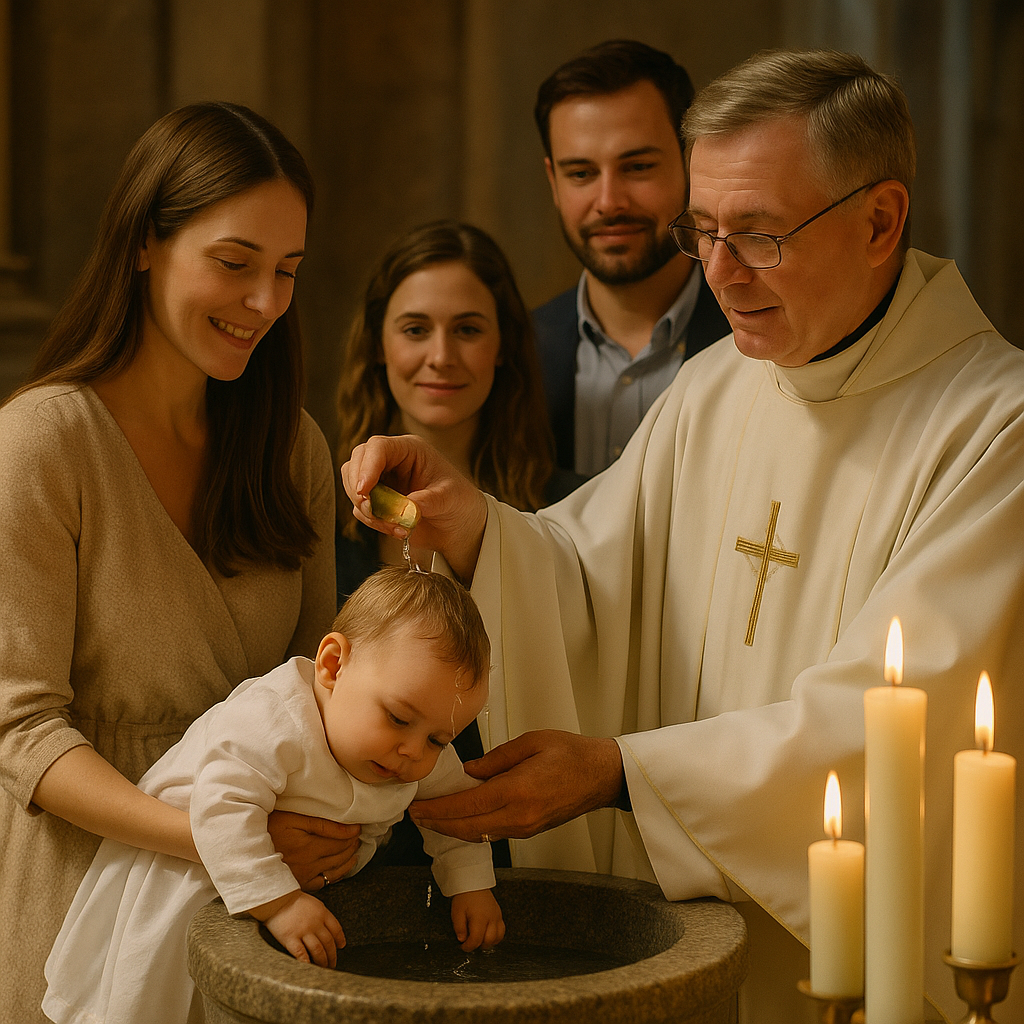
Let’s be honest: baptism can look deceptively simple. A little water, a few prayers, some candle-and-white-garment symbolism, and maybe a baby who decides this is the exact wrong moment to test the parish acoustics. But for Catholics, baptism is not just a lovely family tradition or a spiritual photo-op for the album. It is the beginning of a new life in Christ.
Baptism is the sacrament that opens the door to the Christian life and marks a person forever as belonging to Jesus. That’s a pretty serious gift for what appears, at first glance, to be such a small moment.
What Is Baptism in the Catholic Church?
The Catholic Church teaches that baptism is the “basis of the whole Christian life,” the “gateway to life in the Spirit,” and the sacrament that gives access to the other sacraments (CCC 1213). In other words, baptism is where the Christian journey begins.
And this isn’t just Church paperwork with fancy language. Scripture is crystal clear. Jesus tells Nicodemus, “No one can enter the kingdom of God without being born of water and Spirit” (John 3:5, NABRE). After the Resurrection, Jesus gives the apostles their mission: “Go, therefore, and make disciples of all nations, baptizing them…” (Matthew 28:19).
That means baptism is not a later Catholic add-on. It comes from Christ himself.
St. Paul puts it beautifully in Romans 6:3–4: “We who were baptized into Christ Jesus were baptized into his death… so that we too might live in newness of life.” For Catholics, baptism is a real participation in Jesus’ death and Resurrection. It is not just a sign of faith already present; it is a sacrament that gives grace and changes the soul.

What Baptism Does
According to the Catechism of the Catholic Church, baptism does several profoundly important things.
1. It forgives sins
Baptism removes original sin and, if the person being baptized is an adult, all personal sins committed before baptism. The Church teaches that it washes away sin and restores sanctifying grace.
That’s why Peter says at Pentecost: “Repent and be baptized, every one of you, in the name of Jesus Christ for the forgiveness of your sins” (Acts 2:38). Baptism is not merely a rinse-off. It is spiritual rebirth.
A useful way to think about it: baptism does not just make someone “cleaner.” It makes them new.
2. It makes us children of God
Through baptism, a person becomes an adopted son or daughter of God. That means the baptized are not merely “religious people” or “churchgoers.” They belong to the family of God.
St. Paul says, “For all of you who were baptized into Christ have clothed yourselves with Christ” (Galatians 3:27). That is more than a nice metaphor. Baptism gives us a new identity. We are marked as Christ’s own.
So if the world says, “You are what you achieve,” baptism answers, “Nope. You are first what God has made you.”
3. It incorporates us into the Church
Baptism joins a person to the Body of Christ, the Church. No one is baptized in isolation. Even when it happens in a small parish with a handful of relatives, a prayerful priest, and one sleepy candle that keeps threatening to go out, baptism unites that person to the worldwide family of believers.
This matters because baptism is not only about individual salvation. It is also about communion, mission, and belonging.
You are not baptized into private Christianity. You are baptized into Christ’s Church.
4. It leaves a permanent spiritual mark
Baptism cannot be repeated. The Church teaches that it leaves an indelible character on the soul. Once baptized, always baptized.
Even if someone later drifts from the faith, the baptism is not erased. God’s mark remains. That is both sobering and comforting: sobering because baptism is serious, comforting because God’s claim on us does not depend on our moods or our perfection.
Why Baptism Is Necessary
Catholics believe baptism is ordinarily necessary for salvation because Christ himself linked it to rebirth and entry into the kingdom. The Church teaches this clearly, while also trusting in God’s mercy for extraordinary situations.
Jesus says, “Whoever believes and is baptized will be saved” (Mark 16:16). St. Peter adds, “Baptism… now saves you” (1 Peter 3:21). That does not mean water works like magic. The water is not enchanted by itself. It means baptism truly unites us to Christ and applies his saving grace to us.
Now, before this starts sounding like a theology final exam, here’s the important balance: the Church also recognizes that God is not limited by the sacraments he gave us. The Catechism speaks of baptism of blood and baptism of desire. In other words, martyrs who die for the faith, and those who sincerely seek God but die before receiving baptism, can be saved through God’s mercy.
Still, baptism remains the ordinary and commanded way Christ established. God can work outside the sacraments; that does not make the sacraments optional.

Why Catholics Baptize Infants
This is one of the most common questions people ask: Why baptize babies who cannot yet profess faith on their own?
The answer is refreshingly simple: baptism is a gift, not a reward.
Infants are baptized because they, too, need to be freed from original sin and brought into the life of grace. The faith is professed by the parents and godparents, who promise to raise the child in the Catholic faith.
This practice is ancient. The early Church baptized whole households, and the logic is deeply Catholic: if salvation is a gift, why delay giving it to a child?
Some people hear infant baptism and think, “But the baby can’t choose!” True. Babies also cannot choose diapers, toothbrushing, or bedtime, but that doesn’t stop parents from acting for their good. The Church sees baptism as an act of loving responsibility, not coercion.
Of course, this also means parents and godparents have a real duty. Baptism is not magic parenting glitter. It places a child within the life of the Church and calls the adults around them to help that child grow in faith.
The Church entrusts children who die without baptism to the mercy of God, while still encouraging parents to bring their children to the sacrament as soon as possible.
Baptism and the Christian Life
Baptism is not something Catholics are supposed to “file away” after the ceremony. It shapes everything that follows.
The baptized are called to live as people who have died to sin and risen with Christ. That means:
– rejecting sin and temptation
– praying regularly
– receiving the Eucharist worthily
– confessing sins when necessary
– growing in holiness
– serving others in charity
At the baptismal liturgy, Catholics renew their renunciation of Satan and their profession of faith. That matters because baptism is both a gift and a promise. God gives grace; we respond with discipleship.
Here’s where things get really interesting: baptism is not just about what happened once in the past. It is a permanent calling. Every time a Catholic resists temptation, chooses charity, returns to Confession, or prays with trust, that baptismal grace is doing its work.
St. Augustine famously taught that the sacraments are outward signs of inward grace. Baptism is the clearest example: water on the outside, new life on the inside.

What Baptism Means for You Today
If you are baptized, your life already bears the mark of Christ. That means your identity is not defined by failure, confusion, or the world’s labels. You belong to Jesus.
That is not sentimental language. It is a spiritual fact.
If you are a parent, baptism is a reminder that your child is not your own in the deepest sense. Your first job is to help that child become a saint. Yes, a saint. Not just “a nice person who vaguely believes in God when convenient.”
If you are preparing for baptism, you are preparing for a radical new beginning. You are not simply joining a club. You are being buried with Christ and raised with him.
And if you were baptized long ago but have drifted, baptism is still a call back home. God has not forgotten your name.
Final Thoughts
Baptism means far more for Catholics than a religious tradition or family celebration. It is rebirth, forgiveness, adoption, membership in the Church, and the beginning of new life in Christ. It is the sacrament that tells us who we are and whose we are.
So if you have been baptized, remember the grace you have received. Revisit the promises made at your baptism. Read Romans 6, John 3, and Acts 2. Pray for the grace to live out what baptism began.
And if you have not yet been baptized, or you are preparing for it, know this: God is inviting you into his family. That invitation is worth saying yes to.
FAQ: What Catholics Often Ask About Baptism
Is baptism necessary for salvation?
The Church teaches that baptism is ordinarily necessary for salvation because Christ established it as the gateway to life in the Spirit (CCC 1257). God is not bound by the sacraments, but we are bound to seek them.
Can baptism be repeated?
No. Baptism leaves an indelible mark on the soul, so it is received only once.
Why do Catholics baptize babies?
Because baptism is a gift of grace, not a reward for understanding. Parents and godparents promise to raise the child in the faith.
What does baptism remove?
Baptism removes original sin and, in adults, personal sins committed before baptism.
What should a baptized Catholic do afterward?
Live out the grace of baptism through prayer, the sacraments, repentance, and charity. Baptism is the beginning, not the finish line.