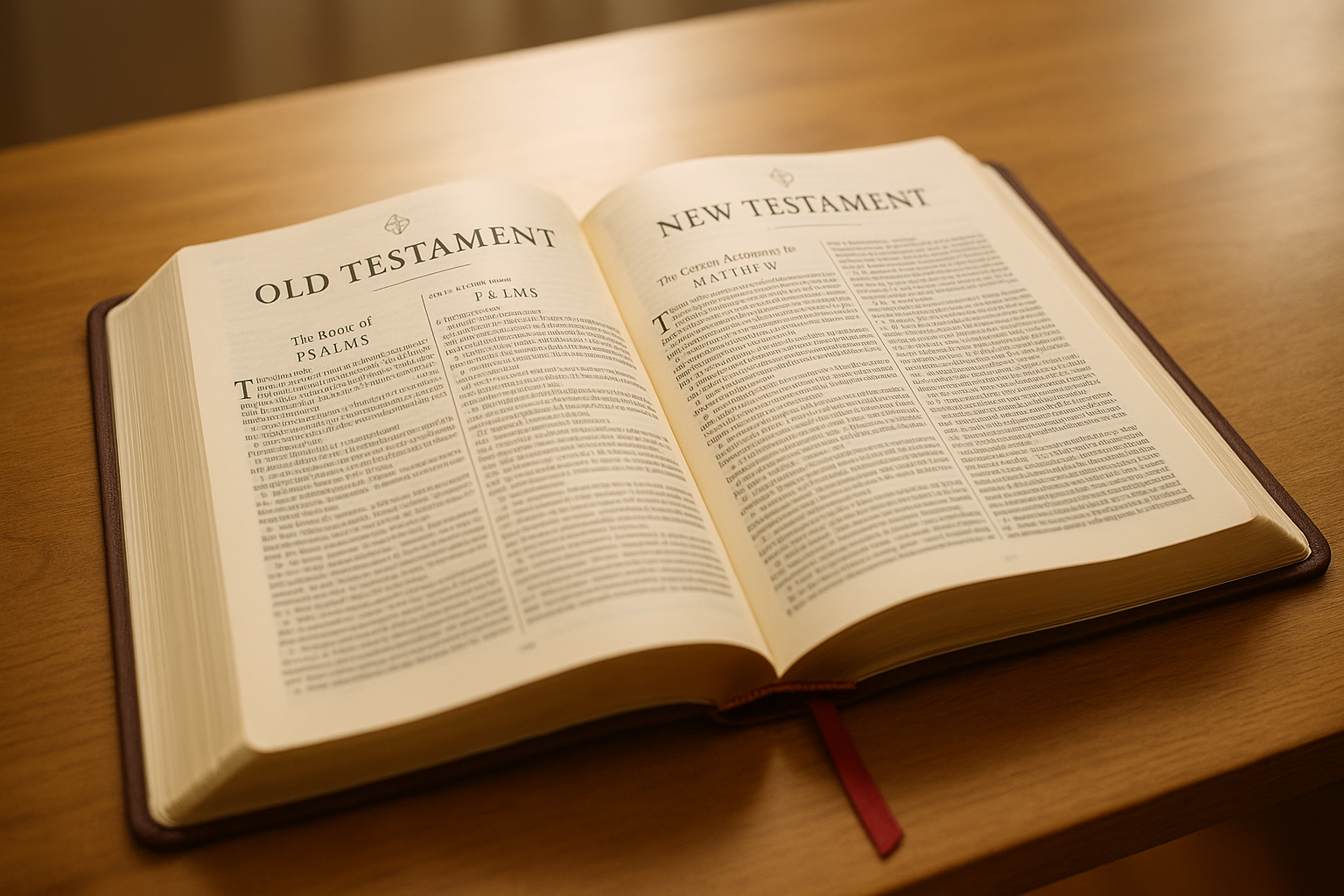
If you’ve ever stood in a Catholic bookstore staring at five different Bible covers and thought, “Why does this feel harder than buying a phone?”—you’re not alone.
What Bible do Catholics use? The short answer is this: Catholics use approved Bibles with the full 73-book canon. In the United States, the most commonly used translation is the NABRE—the New American Bible, Revised Edition. Around the world, Catholics also use the RSV-CE, RSV-2CE, Jerusalem Bible/New Jerusalem Bible, the Douay-Rheims, and other approved Catholic editions.
So, when Catholics ask which Bible to use, the real question is not just, “Which one is easiest to read?” It’s also, “Is this a complete Catholic Bible?” And yes, that distinction matters quite a bit.
The Catholic Bible Has 73 Books
A Catholic Bible includes:
– 46 books of the Old Testament
– 27 books of the New Testament
That makes 73 books total.
The Catholic canon also includes the deuterocanonical books, which are:
– Tobit
– Judith
– Wisdom
– Sirach (Ecclesiasticus)
– Baruch
– 1 Maccabees
– 2 Maccabees
– additions to Esther and Daniel
This is not some tiny footnote buried in the back like forgotten parish raffle tickets. It is part of what makes a Bible Catholic.
The Church teaches that the canon of Scripture comes to us through apostolic Tradition and the Church’s discernment, not by private preference or a spiritual popularity contest. The Catechism says the Church received the canon through Tradition and that Sacred Scripture must be read in the living Tradition of the Church (CCC 120–123). It also teaches that “the Church does not derive her certainty about all revealed truths from the holy Scriptures alone” (CCC 82).

The Most Common Catholic Bible in the United States: NABRE
In the United States, the New American Bible Revised Edition (NABRE) is the most widely used Catholic Bible translation. It’s the one many Catholics encounter in parish life, study materials, and Catholic publishing.
The NABRE is favored because it is:
– Approved for Catholic use
– Readable in modern English
– Widely available in Catholic editions
– Commonly used in U.S. Catholic study Bibles
It’s also important because the United States Conference of Catholic Bishops (USCCB) has used NAB-based translations in the liturgy. So, the Scripture readings Catholics hear at Mass in the U.S. are closely tied to this translation tradition.
That means if you hear a verse at Mass and think, “Hmm, my Bible phrases that differently,” you’re probably not losing your mind. You’re just bumping into the difference between a personal Bible and a liturgical text.
Is the Bible at Mass the Same as the Bible on Your Shelf?
Not always.
Here’s the simple version:
– The Bible you buy may be NABRE, RSV-2CE, Douay-Rheims, or another approved Catholic translation.
– The lectionary at Mass is the book used for the readings proclaimed during the liturgy.
They are related, but not identical. Liturgical texts are prepared for public worship and can differ from study editions.
So, if you hear a reading at Mass and think, “Wait, my Bible says that differently,” don’t worry. Your Bible didn’t suddenly develop an attitude. It’s just a different approved text serving a different purpose.

Other Catholic Bible Translations You’ll See
RSV-CE and RSV-2CE
The Revised Standard Version, Catholic Edition (RSV-CE) and RSV-2CE are very popular among Catholics, especially for study, apologetics, and serious reading.
Why do many Catholics like them?
– They are more literal than some other translations
– They read smoothly
– They are widely respected for study
– They are often used in Catholic publications and formation materials
The RSV-2CE (the Ignatius Study Bible uses this translation) is a revised version with updated language and is frequently recommended by Catholic teachers and apologists.
If the NABRE is the friendly parish bulletin version, the RSV-2CE is often the Bible that shows up ready to take notes.
Jerusalem Bible and New Jerusalem Bible
Outside the United States, the Jerusalem Bible and New Jerusalem Bible are well known and widely used in many English-speaking Catholic settings.
These translations are often appreciated for their:
– literary style
– readability
– devotional tone
They tend to be a little more interpretive in places, which some readers love and others find less ideal for close study. That’s not a defect so much as a translation style.
Douay-Rheims Bible
The Douay-Rheims is a classic Catholic English Bible translated from the Latin Vulgate. It has a long history and remains beloved by many traditional Catholics.
Its strengths include:
– strong historical value
– very literal style
– beautiful, formal language
Its downside? The English is older and can feel a little like Shakespeare and a catechism decided to share a desk.
Still, many Catholics treasure it for prayer and devotion.
What Makes a Bible “Catholic”?
A Bible is considered Catholic when it has:
1. The full 73-book canon
2. Church approval for publication
3. Faithful translation consistent with Catholic teaching
You may also see the terms:
– nihil obstat — “nothing stands in the way”
– imprimatur — “let it be printed”
These mean the Church has reviewed the text and found nothing contrary to faith or morals.
That does not mean every Catholic Bible is identical. It means the translation is suitable for Catholic use.

Which Catholic Bible Should You Use?
If you’re choosing a Catholic Bible, the best one depends on your purpose:
– For daily reading: NABRE or New Jerusalem Bible
– For study and apologetics: RSV-CE or RSV-2CE
– For traditional devotional reading: Douay-Rheims
– For parish life in the U.S.: NABRE is the most familiar
A good Bible is one you will actually open, read, pray with, and let shape your life.
Honestly, the “best” Bible is not the one that looks most impressive on your bookshelf. It’s the one that gets dog-eared from use.
Scripture Points Us to Scripture and the Church
Catholics believe the Bible is inspired by God. As 2 Timothy 3:16–17 says in the NABRE: “All scripture is inspired by God and is useful for teaching, for refutation, for correction, and for training in righteousness.”
But Catholics also remember 2 Thessalonians 2:15, where St. Paul says to “hold fast to the traditions” passed on “by word of mouth or by letter.” That is a key Catholic principle: Scripture is precious, but it is not isolated from the Church that received, preserved, and interprets it.
That’s why Catholics read the Bible with the Church, not instead of the Church.
FAQ: What Bible Do Catholics Use?
Do Catholics use a different Bible than Protestants?
Yes and no.
Catholics and Protestants both use the New Testament, but Catholics use a Bible with 73 books, while many Protestant Bibles have 66 books. The difference is the deuterocanonical books in the Old Testament.
Is the NABRE a Catholic Bible?
Yes. The NABRE is an approved Catholic Bible and is the most commonly used translation in the United States.
Can Catholics use the RSV-2CE?
Yes. The RSV-2CE is an approved Catholic translation and is very popular for study and personal reading. A popular version of the translation is the Ignatius Study Bible.
What is the best Bible for a new Catholic?
A good starting point is the NABRE or the RSV-2CE. Both are Catholic, readable, and widely respected.
Does a Catholic Bible need an imprimatur?
For Catholic publication, yes, it should have Church approval such as an imprimatur. That indicates it has been reviewed for fidelity to Catholic teaching.
Final Takeaway
So, what Bible do Catholics use?
Catholics use approved Bibles that contain the full 73-book canon. In the United States, the NABRE is the most commonly used translation. Worldwide, Catholics also use the RSV-CE, RSV-2CE, Jerusalem Bible/New Jerusalem Bible, Douay-Rheims, and other approved translations depending on region and purpose.
If you want a simple recommendation: choose a Catholic Bible with an imprimatur, stick with one you can read regularly, and make it part of your prayer life.
A Bible on a shelf is nice. A Bible in your hands, in your heart, and in your daily prayer is even better.