If you have ever sat through Mass and wondered, “Wait… what exactly do Catholics mean when they say the bread and wine become the Body and Blood of Christ?” you are in very good company.
The word transubstantiation sounds like it belongs in a theology final exam, or at least in a conversation where someone has already brought three coffee refills and a whiteboard. But behind the fancy word is one of the most beautiful truths in Catholic life: Jesus Christ is truly, really, and substantially present in the Eucharist.
Not symbolically only. Not as a religious memory. Not as a spiritual vibe. He gives us himself.
And that is a very big claim. It is also exactly what the Church has always believed.

The Basic Meaning of Transubstantiation
The Catechism of the Catholic Church explains that “by the consecration of the bread and wine there takes place a change of the whole substance of the bread into the substance of the Body of Christ and of the whole substance of the wine into the substance of his Blood” (CCC 1376). The Church calls this change transubstantiation.
In plain English:
– What stays the same: the outward appearances of bread and wine—taste, texture, smell, color
– What changes: their deepest reality, or “substance”
– What they become: the Body, Blood, Soul, and Divinity of Jesus Christ
So when Catholics kneel before the tabernacle or adore the Eucharist, we are not treating a religious symbol like it’s a lucky charm. We are adoring the Lord himself.
Why Catholics Believe It
Catholic teaching on the Eucharist is not a medieval invention dreamt up by overcaffeinated monks. It comes straight from Scripture and the witness of the early Church.
Jesus’ Words at the Last Supper
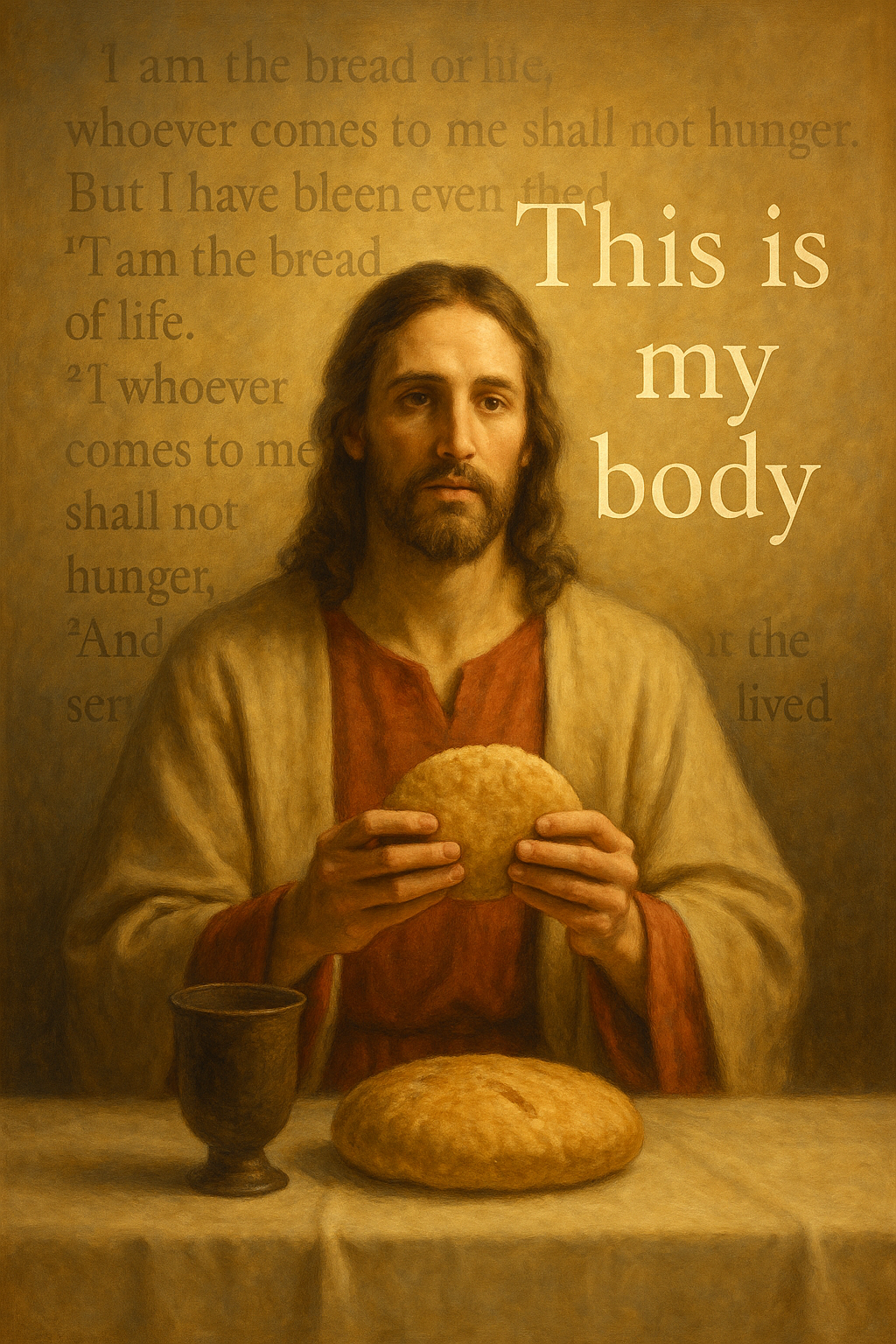
At the Last Supper, Jesus did not say, “This represents my body.” He said, “This is my body” and “This is my blood” (Matthew 26:26–28; Mark 14:22–24; Luke 22:19–20, NABRE).
That matters.
Jesus is not careless with words. If he says, “This is my body,” Catholics believe him. Not because we are trying to be difficult, but because we trust the One who can turn water into wine, calm storms, and raise the dead.
The Bread of Life Discourse
In John 6, Jesus goes even further. He says:
“For my flesh is true food, and my blood is true drink” (John 6:55, NABRE).
That is not exactly the kind of line people file under “probably metaphor, no need to worry about it.”
In fact, many of Jesus’ listeners found the teaching so difficult that they walked away. And here’s the striking part: Jesus did not run after them saying, “No, no, you misunderstood—I was being symbolic.” He let the teaching stand. That silence says a lot.

St. Paul’s Witness
St. Paul also speaks of the Eucharist in very real terms. He writes:
“The cup of blessing that we bless, is it not a participation in the blood of Christ?” (1 Corinthians 10:16, NABRE)
Then he adds a serious warning:
“Whoever, therefore, eats the bread or drinks the cup of the Lord unworthily will have to answer for the body and blood of the Lord” (1 Corinthians 11:27, NABRE).
That warning only makes sense if the Eucharist is truly holy—and truly Christ.
What the Church Teaches
The Church has never been shy about this teaching. The Catechism says:
– CCC 1374: Christ is present in the Eucharist “truly, really, and substantially.”
– CCC 1375: this change is brought about by the power of Christ’s word and the Holy Spirit.
– CCC 1413: by the consecration, Christ himself is present under the appearances of bread and wine.
The Council of Trent gave the classic doctrinal explanation, teaching that after consecration the whole substance of bread and wine is changed into the substance of Christ’s Body and Blood. The Church used the word transubstantiation to guard two truths at once:
1. Christ is truly present.
2. The appearances of bread and wine remain.
That is very Catholic: clear, careful, and just mysterious enough to keep us humble.
A Little History: Why the Term Matters
The belief in the Real Presence is ancient. Christians from the earliest centuries spoke about the Eucharist with awe and reverence, not as a mere sign but as something sacred and real.
The term transubstantiation came later, as the Church sought precise language to explain what she had always believed.
St. Thomas Aquinas helped shape the doctrine by using the philosophical terms substance and accidents. Don’t let the words scare you off. This is not a philosophy ambush.
– Substance = what a thing truly is
– Accidents = how it appears to the senses
So, after consecration, the Eucharist still looks, tastes, and feels like bread and wine. But its deepest reality has changed into Christ himself.
This is why the Eucharist is a mystery, not a contradiction. Our senses tell us one thing; faith tells us the deeper truth.
Common Misunderstandings About Transubstantiation
Because this teaching is so central, it is also often misunderstood. Let’s clear up a few common confusion points.
“Catholics think the bread and wine just symbolize Jesus.”
Nope. Catholics do believe symbols matter, but the Eucharist is not merely symbolic. It is not just a reminder of Jesus—it is Jesus truly present.
“The bread stops being bread in a physical sense.”
The Church is not saying the host suddenly changes its appearance like a stage trick. It still looks and tastes like bread. What changes is the underlying reality, not the outward appearance.
“Jesus is divided into pieces.”
Not at all. The whole Christ is present under each Eucharistic species. Even the smallest fragment of the consecrated host contains the fullness of Christ’s presence.
“The Mass repeats Calvary.”
The Mass does not repeat the sacrifice of the Cross. It makes the one sacrifice of Christ present sacramentally. Same sacrifice, different mode of presence. In other words: not a rerun, but a holy making-present.

Why This Matters for Catholic Life
Transubstantiation is not just a doctrine to store in the mental filing cabinet next to “canon law trivia” and “why incense makes everyone feel more reverent.” It changes the way Catholics live.
If Jesus is truly present in the Eucharist, then:
– Mass is not routine — it is encounter
– Holy Communion is not ordinary food — it is divine nourishment
– Eucharistic adoration is not empty time — it is worship
– Reverence at Mass is not optional — it is fitting
That is why Catholics genuflect, observe the Eucharistic fast, and prepare carefully for Communion. The Church teaches that the Eucharist is “the source and summit of the Christian life” (CCC 1324). That means everything flows from it and returns to it.
This teaching has real-life consequences too. If I truly believe I am receiving the Lord of heaven and earth, I will not approach casually. I will prepare. I will repent. I will receive with gratitude.
The Gift at the Heart of the Faith
At the center of transubstantiation is not a technical term, but a gift.
Jesus gives himself to us.
He does not hand us only a message, or a sacred memory, or a spiritual boost for the week. He gives us his very self under the humble appearances of bread and wine.
That is the scandal and the wonder of the Eucharist: God becomes small enough to be received in Communion.
If that does not stop you for a moment, it probably should.
Final Thoughts
Transubstantiation may sound complicated, but the message is wonderfully simple: Jesus keeps his promise.
At Mass, by the power of his word and the Holy Spirit, bread and wine become his Body and Blood. The Church has guarded this teaching for centuries because it protects something priceless: our encounter with the living Christ.
If you want to go deeper, read John 6, the Last Supper accounts in the Gospels, and 1 Corinthians 11. Spend time with the Catechism, especially CCC 1322–1419. And if you can, spend a few quiet minutes in Eucharistic adoration.
Sometimes the best way to understand transubstantiation is not by arguing about it for an hour after coffee.
It is by kneeling before the One who makes it real.