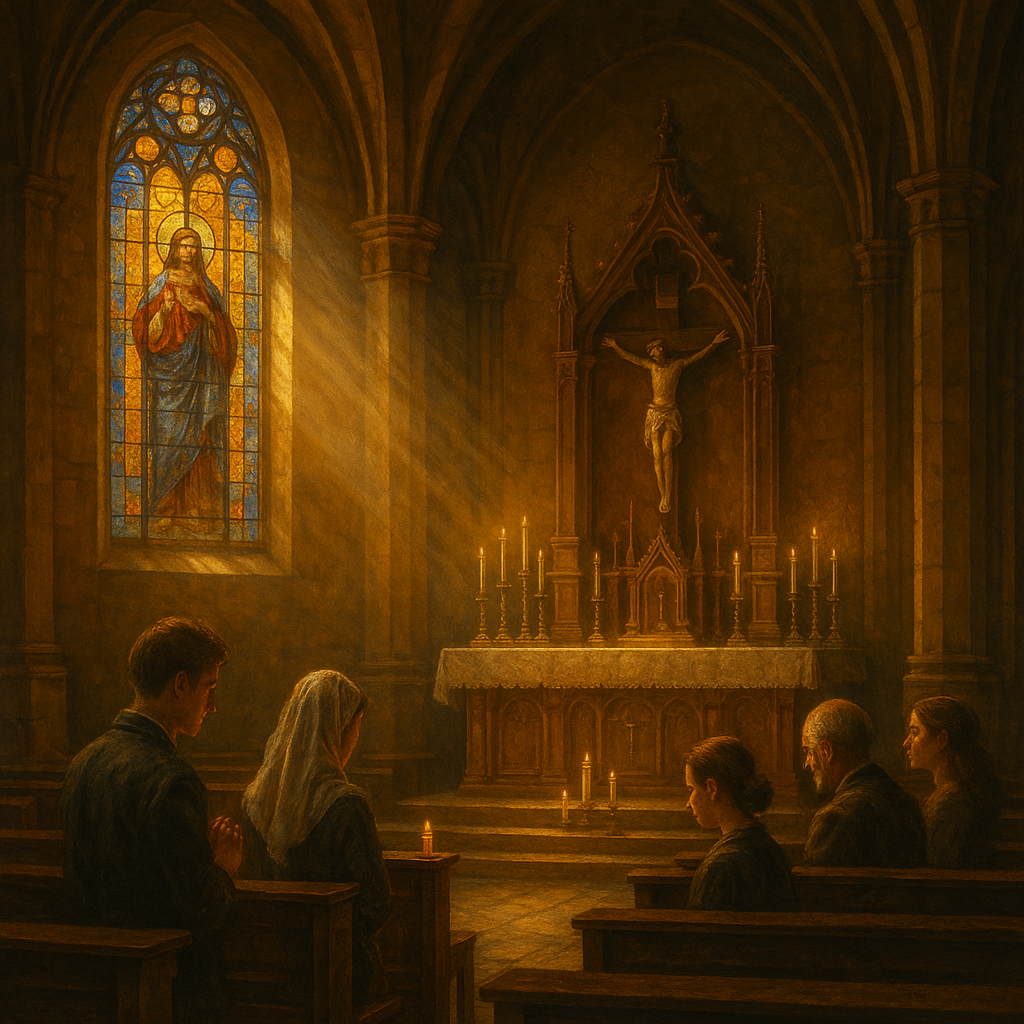
If you’ve ever wondered what Catholicism is, you’re not alone. Some people think Catholicism is mostly rules, rituals, saints, and trying to survive Sunday Mass without noticing how long the homily is. But at its heart, Catholicism is far more beautiful: it is the Christian faith handed on from Jesus Christ through the apostles, lived in the Catholic Church, and centered on love, grace, and salvation.
In a nutshell, Catholicism is the way Catholics know, worship, and follow Jesus Christ within the one, holy, catholic, and apostolic Church professed in the Creed. It is a faith rooted in Scripture, Sacred Tradition, and the sacraments, and it shapes the lives of more than a billion people around the world.
What Does “Catholic” Mean?
The word catholic comes from the Greek katholikos, meaning “universal.” That matters, because the Church is meant for all people, in all places, and in every age. It is not a club for spiritual overachievers. It is a family.
The Catechism of the Catholic Church explains that the Church is catholic because Christ is present in it and because it has received the fullness of the means of salvation (CCC 830–831). In other words, Catholicism is not just one Christian option among many. It claims to preserve the fullness of the life and teaching Christ gave to his Church.
That is why Catholics speak of the Church as both deeply local and gloriously universal. Whether you are in a cathedral in Rome, a mission parish in the countryside, or a tiny chapel tucked between a bakery and a parking lot with questionable lighting, it is still the same Church.
Takeaway: Catholic means “universal,” and the Church exists for everyone, not just the spiritually well-organized.

What Is Catholicism Centered On?
At the center of Catholicism is not a set of ideas, but a Person: Jesus Christ.
Catholics believe that Jesus is true God and true man, the Savior who became incarnate, died for our sins, and rose from the dead. As Scripture says, “God so loved the world that he gave his only Son” (John 3:16, NABRE). St. Paul also reminds us that Christ died for our sins and was raised on the third day (see 1 Corinthians 15:3–4, NABRE).
Catholicism teaches that salvation is a gift of God’s grace. We do not earn our way to heaven like it is a spiritual frequent-flyer program. Rather, we cooperate with God’s grace, which heals, transforms, and strengthens us.
This is one of the most important things to understand about Catholic life: it begins with God’s initiative. God loves first. God calls first. God saves first. Our response matters, but it is always a response to grace already at work.
Takeaway: Catholicism is not self-improvement with incense. It is life in Christ by grace.
Scripture and Tradition in Catholicism
One of the most distinctive Catholic teachings is that God’s revelation comes to us through both Sacred Scripture and Sacred Tradition. The Catechism says that “Sacred Tradition and Sacred Scripture… are bound closely together” and flow from the same divine source (CCC 80–83).
That means Catholics do not believe the Bible appeared from the sky fully assembled with a table of contents. Rather, the apostles preached the Gospel, the Church preserved it, and the Holy Spirit guided the Church in recognizing the biblical canon.
A key biblical passage here is 2 Thessalonians 2:15 (NABRE): “Stand firm and hold fast to the traditions that you were taught, either by an oral statement or by a letter of ours.” Catholics see this as a clear sign that apostolic teaching was handed on both orally and in writing.
Here is where things get interesting: this does not mean Catholics put tradition above Scripture, or Scripture above tradition, as if they were competing teams in a theological bracket. They belong together. Scripture is inspired by God; Tradition is the living transmission of that same Gospel in the Church.
Takeaway: The Catholic faith is biblical and apostolic, rooted in both the written Word of God and the Church’s living memory.
The Church, the Pope, and the Bishops
Catholics believe Jesus founded a visible Church and gave authority to the apostles. This is why the Church is described in the Creed as “one, holy, catholic, and apostolic.”
Apostolic means the Church is built on the apostles and continues through their successors. This is called apostolic succession. The bishops today are understood to stand in an unbroken line of ordination and mission going back to the apostles.
The pope, as Bishop of Rome, is believed to be the successor of St. Peter. Jesus says to Peter, “You are Peter, and upon this rock I will build my church” (Matthew 16:18–19, NABRE). Catholics also look to John 21:15–17, where Jesus tells Peter to “feed my lambs” and “tend my sheep.”
The pope serves as a visible sign of unity, while bishops help shepherd the Church in communion with him. This structure is not just administrative—it reflects Catholic belief that Christ continues to guide his Church through human leaders.
Now before this starts sounding like a theology final exam, the practical point is simple: Jesus did not leave behind a loose collection of private opinions. He formed a Church, gave it authority, and promised to remain with it. Catholicism sees the papacy and episcopacy as part of that gift.
Takeaway: Catholics believe Christ guides his Church through apostolic leadership, not spiritual freelancing.

The Seven Sacraments in Catholicism
Catholicism is deeply sacramental. That means Catholics believe God gives grace through visible signs. The Church teaches there are seven sacraments:
1. Baptism – entry into the Christian life
2. Confirmation – strengthening of baptismal grace
3. Eucharist – the heart of Catholic worship
4. Penance/Reconciliation – forgiveness of sins after baptism
5. Anointing of the Sick – healing and strength in suffering
6. Holy Orders – ordination of bishops, priests, and deacons
7. Matrimony – the covenant between a man and a woman
The Eucharist is especially central. The Catechism calls it the “source and summit of the Christian life” (CCC 1324). Catholics believe that in the Mass, the bread and wine truly become the Body and Blood of Christ. Jesus’ words in John 6 and at the Last Supper in Matthew 26:26–28 are key passages for this belief.
This is one of those teachings that can sound surprising at first glance, but the point is beautifully consistent: if God uses matter to save us—water, oil, bread, wine, human words, human hands—then grace is not floating somewhere in the abstract. It enters ordinary life.
The sacraments are not magic tricks. They are encounters with Christ. And honestly, that is a lot more powerful than a religious snack break.
Takeaway: The sacraments are how Christ shares his life with his people through tangible, grace-filled signs.
Catholicism as a Way of Life
Catholicism is not only about what you believe on paper. It is also about how you live.
Catholics are called to pray, worship, serve the poor, forgive others, and grow in holiness. The Church teaches that every baptized person has a vocation to become a saint—not necessarily with a halo and a feast day, but by loving God and neighbor in everyday life.
That means holiness can happen in ordinary places: a kitchen, a classroom, an office, a hospital room, or a messy family dinner. Catholicism takes human life seriously because God does.
This is where Catholic teaching gets wonderfully practical. Faith touches how we work, how we suffer, how we treat our families, how we handle anger, and how we forgive. It even touches the small stuff—like patience in traffic, charity in conversation, and humility when we realize we were sitting in the wrong pew again.
The Christian life is not reserved for people with perfect schedules and color-coded prayer journals. It is for real people with real lives.
Takeaway: Catholicism is not just something you believe; it is a way of living with God in everyday life.

A Faith with History and Depth
Catholicism traces its roots to Jesus and the apostles in the first century. Over time, the Church clarified its teachings through councils, saints, martyrs, and theologians. The early Church defended the divinity of Christ, the Trinity, and the authority of the Church through times of controversy and persecution.
This long history matters because it shows Catholicism is not a recent invention. It is a living tradition that has endured for 2,000 years, always seeking to remain faithful to Christ.
You can see this in the witness of the early Christians, the writings of the Church Fathers, the creeds, the councils, and the saints who kept handing on the faith generation after generation. Catholicism is not simply old for the sake of being old. It is ancient because it is rooted in the life of the Church Jesus established.
Takeaway: Catholicism has deep historical roots, and that continuity matters because truth does not expire.
Common Questions About Catholicism
Is Catholicism just about rules?
No. Catholicism includes moral teaching, but it is first about relationship with Jesus Christ. The rules exist to protect love, freedom, and human dignity.
Do Catholics worship Mary and the saints?
No. Catholics worship God alone. Mary and the saints are honored as holy members of Christ’s body who point us to him.
Why do Catholics go to Mass every Sunday?
Because the Mass is the central act of worship and the fulfillment of the Sunday obligation. It is the Church’s way of keeping the Lord’s Day holy and receiving the Eucharist.
Can someone become Catholic later in life?
Yes. Many people enter the Church through the Order of Christian Initiation of Adults (OCIA). The Catholic Church welcomes seekers from every background.
Takeaway: Catholicism has clear answers to common questions, and asking them is often the first step toward understanding the faith more deeply.
Final Thoughts
So, what is Catholicism? It is the universal Christian faith centered on Jesus Christ, nourished by Scripture and Tradition, lived through the sacraments, and guided by the Church in apostolic succession.
If you are exploring Catholicism, a great next step is simple: read the Gospels, pray honestly, visit a Mass, and explore the Catechism. The Catholic faith is not just something to study—it is someone to encounter.
And that someone is Jesus.
FAQ
What is Catholicism in one sentence?
Catholicism is the Christian faith centered on Jesus Christ, lived in the Catholic Church, and handed on through Scripture, Tradition, and the sacraments.
What do Catholics believe most importantly?
Catholics believe in the Trinity, the divinity of Jesus Christ, the saving power of grace, the authority of the Church, and the centrality of the sacraments—especially the Eucharist.
Is Catholicism Christian?
Yes. Catholicism is one of the oldest expressions of Christianity and traces its origin directly to Jesus Christ and the apostles.
Why is Catholicism different from other Christian traditions?
Catholicism emphasizes apostolic succession, Sacred Tradition alongside Scripture, the papacy, and the seven sacraments, especially the Eucharist.
Recommended Reading
– Why Do Catholics Go to Mass Every Sunday?
– Scripture, Tradition, and the Catholic Faith: How They Work Together