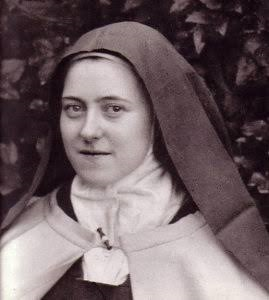
If you’ve ever looked at the lives of the saints and thought, “Well, that’s lovely for them, but I can barely keep up with laundry, prayer, and remembering which mystery of the Rosary I’m on,” St. Thérèse of Lisieux has very good news for you. The Church’s “Little Flower” reminds us that holiness is not built on being impressive. It’s built on loving God faithfully in the middle of ordinary life. And honestly, that is both comforting and a little bit disruptive.
St. Thérèse of the Child Jesus and the Holy Face is one of the most beloved saints in the Catholic Church because she makes the Gospel feel both reachable and radical. Her life was short, hidden, and mostly spent inside a Carmelite cloister, yet her influence is worldwide. She is a Doctor of the Church, patroness of the missions, and one of the clearest witnesses to God’s mercy in modern times.

Who Was St. Thérèse?
St. Thérèse Martin was born in Alençon, France, on January 2, 1873. After the death of her mother, she grew up in Lisieux with a deeply Catholic family. Her parents, Sts. Louis and Zélie Martin, are themselves a holy reminder that sainthood begins at home. Which is a beautiful thought, especially for anyone whose home life currently resembles a Catholic version of organized chaos.
At 15, Thérèse entered the Carmelite convent in Lisieux. She lived there in quiet hiddenness until her death from tuberculosis in 1897 at just 24 years old. She was canonized by Pope Pius XI in 1925 and later declared a Doctor of the Church by St. John Paul II in 1997. The universal Church celebrates her feast on October 1.
Her spiritual legacy comes mainly from her autobiography, Story of a Soul, which continues to guide Catholics of every vocation.
The Little Way: Holiness in Small Things
Thérèse is famous for her “Little Way.” This is not a sentimental slogan or a spiritual shortcut. It is a real path to holiness rooted in humility, trust, and love.
Instead of trying to perform dramatic acts, Thérèse chose to do ordinary things with extraordinary love. She understood that most people do not live heroic public lives. Most people wash dishes, go to work, care for children, deal with illness, manage frustration, and keep showing up. Thérèse says all of that can become holy.
Her way is simple:
– do small things with great love;
– accept your weakness without despair;
– trust God’s mercy more than your own strength;
– offer daily annoyances and sufferings to Christ;
– seek holiness in hidden fidelity.
This fits beautifully with Jesus’ words: “Unless you turn and become like children, you will not enter the kingdom of heaven” (Matthew 18:3, NABRE).
Now, before this starts sounding like a theological bumpsticker, here’s the real point: the Little Way is not about doing less. It is about loving more. Not louder, not flashier, just more deeply and more faithfully.

Confidence in God’s Mercy
One of Thérèse’s greatest insights is that holiness grows from confidence in God, not confidence in ourselves. In Story of a Soul, she wrote, “It is confidence and confidence alone that should lead us to Love.”
That line captures her whole spirituality.
Thérèse did not deny sin, weakness, or suffering. She knew all three very well. But she believed that when a soul falls, it should run to God instead of hiding from Him. This is deeply Catholic. The Catechism teaches that grace is God’s free gift and that human beings cannot save themselves by sheer effort alone (see CCC 1996–2001).
Her teaching also echoes Jesus’ invitation: “Come to me, all you who labor and are burdened, and I will give you rest” (Matthew 11:28, NABRE). Thérèse believed those words were not poetic decoration. They were a promise.
That is one of the reasons her spirituality is so bracing. We are often tempted to treat holiness like a self-improvement project. Thérèse gently pulls that chair out from under us and says, in effect, “No, dear one. Holiness is first about surrender.” Which is humbling, but also very freeing.
A Saint for Ordinary Catholics
One reason Thérèse is so popular is that she speaks to people who do not feel “spiritual enough.” She is a saint for the tired parent, the struggling student, the person fighting temptation, the caregiver who feels unnoticed, and the Catholic who keeps trying again after failure.
She once said that in the heart of the Church she would be love. That is an astonishing statement. She saw that every vocation — priest, missionary, contemplative, spouse, parent, worker — depends on love. Without charity, everything else goes flat.
That insight connects directly to St. Paul’s teaching in 1 Corinthians 13: “If I have not love, I am nothing” (cf. 1 Cor 13:2, NABRE). Thérèse lived that truth in the hidden life of Carmel.
And that hiddenness matters. The Church is not only built by the people with microphones. It is also built by those who pray quietly, forgive repeatedly, endure patiently, and keep loving when nobody is applauding. That is the kind of sanctity Thérèse points to.
Scripture and the Little Flower
Thérèse’s spirituality is deeply biblical. A few passages especially shine through her life:
– Matthew 18:3–4 — becoming like a child
– Luke 12:32 — “Do not be afraid, little flock”
– John 15:9–13 — remaining in Christ’s love
– 2 Corinthians 12:9 — “My grace is sufficient for you”
– 1 Peter 5:7 — casting your anxieties on God
– Psalm 131 — the quiet trust of a child with its mother
These passages help explain why Thérèse’s holiness feels so accessible. She teaches that the Christian life is not primarily about spiritual performance. It is about trustful union with Jesus.
That means the Little Way is not “be cute and hope for the best.” It is a serious Gospel spirituality rooted in Scripture, humility, and abandonment to divine mercy. The childlike confidence Thérèse preached is not immaturity; it is the mature act of entrusting everything to God.

Why the Church Calls Her a Doctor
In 1997, Pope St. John Paul II declared Thérèse a Doctor of the Church. That title is reserved for saints whose teaching has lasting importance for the whole Church. This is striking because Thérèse was not a systematic theologian. She did not write heavy academic treatises.
And yet her little writings carry great spiritual depth.
Pope Francis highlighted this again in his 2023 apostolic exhortation C’est la confiance, which presents Thérèse as a teacher of merciful trust for a worried world. In an age obsessed with control, self-image, and achievement, her message is refreshingly different: let God love you, and learn to love Him back.
That is why the Church continues to hold her up not merely as a sweet saint, but as a true teacher. Her doctrine is simple enough for a child and deep enough for a bishop. That’s a pretty rare combination.
What We Can Learn from St. Thérèse Today
Thérèse is not just a beautiful saint to admire from a distance. She is a guide for daily Catholic life.
Here are a few practical takeaways:
1. Offer your small duties to God.
Your work matters when it is done in love.
2. Do not wait to be “perfect” before praying.
Thérèse teaches us to come to God as we are.
3. Trust more, worry less.
Confidence in God is not naïve; it is Christian.
4. Love the people who are difficult.
This is often where holiness becomes real.
5. Remember that hidden lives matter.
The Church needs saints who are never famous.
6. Let your weakness become a doorway to grace.
God does not need your self-sufficiency. He asks for your trust.
If you want a very practical Thérèse-style challenge, try this: pick one small task today — answering a difficult email, washing a dish, sitting with a sick relative, or praying when you feel distracted — and offer it to God with deliberate love. Small? Yes. Insignificant? Not at all.
A Little Flower with a Big Message
St. Thérèse of Lisieux may have lived quietly, but her message still echoes loudly: holiness is possible, mercy is real, and love is everything. Her Little Way is not about doing less for God. It’s about doing everything — even the smallest thing — with a trusting heart.
If you feel ordinary, weak, or overlooked, Thérèse is your saint. She reminds us that God is not waiting for spectacular greatness. He is waiting for our yes.
And that’s good news for the rest of us.
FAQ About St. Thérèse of Lisieux
What is St. Thérèse of Lisieux known for?
She is best known for her “Little Way,” a spirituality of humble trust, small sacrifices, and loving fidelity in everyday life.
Why is St. Thérèse a Doctor of the Church?
Because her teaching has lasting importance for Catholics everywhere. Her writings show deep spiritual wisdom, especially about trust in God’s mercy.
What does the Little Way mean?
It means becoming holy through small acts done with great love, rather than relying on dramatic gestures or spiritual showmanship.
What is St. Thérèse the patron saint of?
She is patroness of the missions, florists, and those who suffer in the darkness of doubt or spiritual dryness.
What can Catholics learn from St. Thérèse today?
That holiness is possible in ordinary life, grace is stronger than weakness, and love matters more than image.
Leave a Reply